
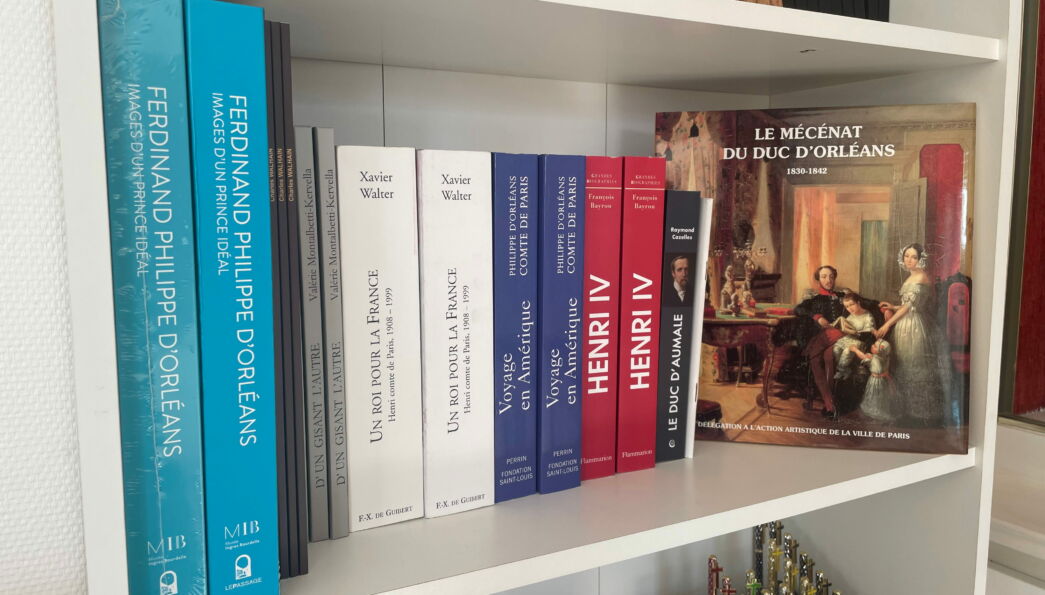
Reference Books
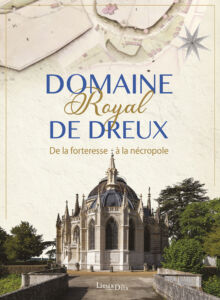 “The Royal Domain of Dreux: From Fortress to Necropolis”
Proceedings of the symposium held in Dreux on June 16–17, 2023, organized by the Regional Directorate of Cultural Affairs (DRAC) for the Centre-Val de Loire region and the Saint-Louis Foundation. Edited by Fabienne Audebrand, Denis Grandemenge, and Irène Jourd’heuil.
Publication date: 2025
Pages: 272
Price: €29
Chosen by Louis-Philippe as the necropolis for the House of Orléans, the Royal Chapel of Dreux is a masterpiece of 19th-century architecture. It is adorned with an abundance of monumental sculpture and features remarkable stained glass notably pieces produced by the Sèvres manufactory based on preparatory cartoons by Ingres. Serving as a setting for recumbent effigies (*gisants*), the chapel also houses an exceptional collection of tombs created by the finest sculptors of the era, including Chapu, Mercié, Millet, and Pradier.
The symposium held in Dreux on June 16–17, 2023, finally brings this site out of the obscurity to which French history had long relegated it. This volume also offers an opportunity to rediscover the significance of the site’s medieval heritage, highlighting the fortress of the Counts of Dreux, as well as sculptures and stained glass from the former and now lost collegiate church of Saint-Étienne.
Recent archival research and an inventory of previously unknown furnishings reveal the opulence of the funeral ceremonies held there and provide insight into the visits made to the site by the King and his family.
 “Louis-Philippe and His Family” : 1830–1848,” by Anne Martin-Fugier
Publication year: 2012
Pages: 312
Price: €9
When Louis-Philippe d’Orléans ascended the throne in 1830, he brought with him a large family that brought new life to the Tuileries Palace and contributed to the bourgeois—yet modern—reputation of the new July Monarchy.
Through a vivid narrative, Anne Martin-Fugier offers an intimate look at a king who, far from being the “everyman” figure often portrayed, governed with authority and managed the monarchical system with both splendor and tradition. The upbringing of the princes and the joys and dramas of daily life are closely intertwined with the official affairs of the
restored court, the government, and the Parliament. By rehabilitating the image of the “citizen-king,” this work sheds new light on a crucial yet little-known period of 19th-century France.
Anne Martin-Fugier is a specialist in 19th-century French society and bourgeois culture. Her publications include, among others, *La Place des bonnes*, *La Vie élégante 1815–1848*, *Les Romantiques*, *Les Salons de la IIIe République*, and *La Vie d’artiste au XIXe siècle*.
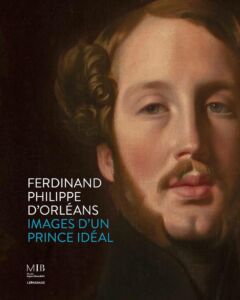 “Ferdinand-Philippe d’Orléans: Images of an Ideal Prince”
Edited by Florence Viguier-Dutheil, Stéphanie Deschamps-Tan, and Côme Fabre
Publication year: 2021
Length: 400 pages
Price: €39
History repeats its tragedies: every century seems to see a captivating figure, youthful, beautiful, and beloved,lose the crown that awaited them, all due to a senseless accident. The fate of Ferdinand-Philippe d’Orléans, the eldest son of King Louis-Philippe who died in 1842 at the age of 31, is reminiscent of that of Princess Diana. While the immense wave of public grief following both their deaths is comparable, the fervor with which artists sought to immortalize the Duke of Orléans is truly exceptional. Through a series of monuments, figures such as Ingres, Scheffer, Pradier, and Triqueti expressed their sincere gratitude toward a man who, during his lifetime, had been their most lavish, sensitive, and generous patron. Many others—prominent among the Romantics, also benefited from his support, including Barye, Corot, Delacroix, Decamps, Delaroche, Huet, and Lami. For writers like Alfred de Musset, Alexandre Dumas, and Victor Hugo, he embodied the literary and political aspirations of a new generation. The “children of the century” were eager to sing his praises, and in doing so, they helped forge his legend.
While the French people looked to him as a future head of state, artists had already found in him their ideal prince. Ingres, who served as his final portraitist, acts as our guide here to rediscover the Duke of Orléans, tracing his life and offering a glimpse into his extraordinary collection of paintings and sculptures, arguably the finest and most daring of its time.
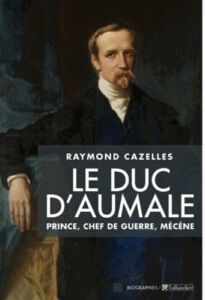
“The Duke of Aumale,” by Raymond Cazelles
Publication: 2013
Pages: 493 pages
Price: €25.90
The son of King Louis-Philippe and commander-in-chief in Algeria at the age of twenty-one, the Duke of Aumale (1822–1897) achieved fame in May 1843 with the celebrated capture of Abd el-Kader’s *smalah* (encampment). His was an extraordinary destiny, a man of many facets: he authored historical works, founded or owned six newspapers, and assembled a rich library of manuscripts and a collection of paintings at Chantilly that rivals those of the world’s greatest museums. Every chapter of his life holds surprising revelations: he was the lover of the most beautiful women of his era; born wealthy, he left behind an even greater fortune upon his death; and he twice experienced exile and proscription. He presided over the trial of Marshal Bazaine and served as a general for the French Republic, a nation for whose presidency he was once a potential candidate. Raymond Cazelles, a former curator of the collections at the Musée de Chantilly (bequeathed by the Duke of Aumale to the Institut de France), draws upon archives and personal correspondence to bring this brilliant, multifaceted prince, a distinguished soldier and an exceptional businessman—out of the shadows. The result is a fascinating portrait.
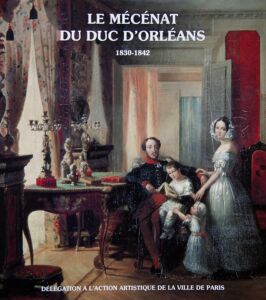 “The Patronage of the Duke of Orléans (1830–1842)”
Publication year: 1993
Length: 176 pages
Price: €30
A collective work edited by Hervé Robert, published in 1993 by the *Délégation à l’Action Artistique de la Ville de Paris* (Delegation for Artistic Action of the City of Paris), with a preface by Jacques Chirac.
The book spans 176 pages and features 169 illustrations, including 8 in color; it is bound in a hardcover with an illustrated dust jacket. It explores various facets of the Duke of Orléans’s patronage, ranging from his literary tastes and musical preferences to the broader artistic life of the period. Serving as both a historical study and an artistic analysis, the book demonstrates how princely patronage can function as a tool for political influence and a catalyst for creative endeavor, securing the Duke of Orléans’s lasting place in the cultural history of the 19th century.
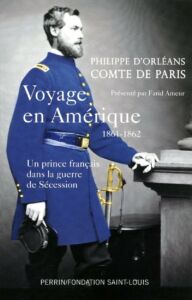 “Journey to America (1861–1862): A French Prince in the Civil War,” by Farid Ameur
Publication year: 2011
Pages: 655
Price: €25
During the Second Empire, the young princes of the House of Orléans, living in exile, found themselves with little to occupy their time. The Count of Paris (aged 23) and his brother, the Duke of Chartres (aged 21), grandsons of King Louis-Philippe decided to travel to America to observe the state of its democracy firsthand, under the guidance of their uncle, the Prince of Joinville. Arriving in New York in September 1861—six months after the outbreak of the Civil War, they were promptly received by President Lincoln and Secretary of State Seward. Eager to serve a righteous cause on the battlefield and perhaps attain some glory, they donned the blue uniforms of the Union Army and were appointed as captains to the staff of General McClellan, commander of the Army of the Potomac. Frequently on the front lines, they took an active part in military operations against the Confederates, though ultimately without success. In July 1862, they departed America, having gained a wealth of diverse experiences. From this exceptional vantage point, the Count of Paris, a man of remarkable maturity and a gifted writer, produced a dense, varied, and precise journal. It serves as a veritable goldmine, hitherto untapped, for historians of the United States, as well as for those studying French politics, given that these princes were the most democratic-minded of all monarchists. This work is published in partnership with the Fondation Saint-Louis, which holds the private papers of the House of France.
 “A King for France,” by Xavier Walter
Publication: 2002
Pages: 989 pages
Price: €40
Why a biography of Henri, Count of Paris (1908–1999)? Because this intelligent and affable prince is one of the great “famous unknowns” of our time.
Jealously guarding his independence, he offered a unique perspective on the 20th century. Attuned to the suffering of the humble and demanding of the elites, he championed social causes and ceaselessly emphasized the virtues of courage within the framework of national solidarity. Convinced—much like Saint Thomas Aquinas—that legitimacy resides in the people, he proposed that the French establish an “arbitral monarchy.” He believed that a hereditary king, belonging to no political party, would base his decisions solely on the nation’s interest. As the custodian of a royal tradition spanning a millennium, he sought to preserve the legacy of 1789—a legacy to which many French people remain deeply attached. Yet, he envisioned institutions that would allow a sovereign people to make informed choices. He hoped that an informed and united citizenry, acting in communion with its king, would enable France to maintain its historic role as a global point of reference—serving both as the “eldest daughter of the Church” and as the “homeland of Human Rights.”
“Xavier Walter’s work presents a fresh perspective on the various stages of Henri d’Orléans’s life; the different facets of his character—consistently compelling, if not without their complexities—emerge gracefully throughout these pages. In a sense, it portrays a Capetian reign—even if only as an underlying, subtle presence. The capacity for empathy characterizes the biographer’s performance from beginning to end; with supreme skill, he has managed to interweave the Prince’s recorded confidences with his own reflections as a historian—reflections written with alacrity, in a style that is both robust and subtle, avoiding excessive brevity while remaining free of any superfluous, drawn-out passages.” – Emmanuel Le Roy Ladurie
Other editions
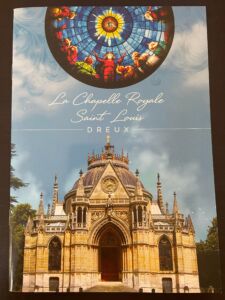
“The Royal Chapel of Saint-Louis in Dreux”
Text: Fondation Saint-Louis, based on work by Jean Lelièvre
Pages: 28 pages
Price: €6
This comprehensive brochure invites you to explore the Royal Chapel of Saint-Louis in depth, a jewel of 19th-century heritage and the necropolis of the House of Orléans. Designed to complement and extend your visit, it traces the site’s history, from its origins to its architectural and artistic evolution.
Richly illustrated, the brochure highlights the exquisite stained glass, the delicate painted glass panels, and the beauty of the recumbent effigies (*gisants*). Its most valuable feature is a detailed map of the tombs, which allows visitors to identify each person laid to rest here and gain a better understanding of the layout of this royal necropolis.
Accessible to all, this guide is an invaluable resource for visitors looking to deepen their knowledge, while also serving as a lasting memento of their time spent in the heart of this site, so deeply steeped in history.
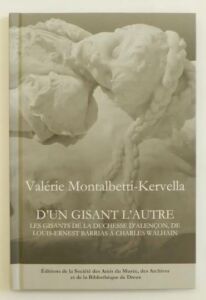 “From One Recumbent Effigy to Another,” by Valérie Montalbetti-Kervella
Publication year: 2019
Length: 102 pages
Price: €18
This narrative traces the unique life and fate of Sophie-Charlotte in Bavaria, Duchess of Alençon, who perished tragically in the fire at the Bazar de la Charité. Through this dramatic event, the story of her sculpted legacy unfolds, embodied by two funerary effigies. The book sheds light on the evolution of their artistic conception from the work of Louis-Ernest Barrias to that of Charles-Albert Walhain revealing the aesthetic, symbolic, and commemorative dimensions inherent in the representation of the Duchess.
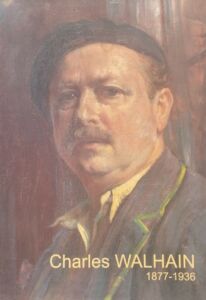 “Charles Walhain 1877–1935”
Pages: 50 pages
Price: €17.50
Charles-Albert Walhain (1877–1936), a painter and sculptor of the Belle Époque, remains a discreet yet fascinating figure in French art today. Trained at the École des Beaux-Arts in Paris, he gained recognition as a portraitist, elegantly capturing the faces and social conventions of an era in the midst of profound transformation.
This book, written by his family, traces his artistic journey and highlights the richness of his body of work ranging from portraits and religious decor to sculptures and commemorative monuments. Through these creations, Walhain emerges as a sensitive observer of his time, particularly in the aftermath of the First World War, when his work became imbued with a sense of remembrance and quiet reflection.
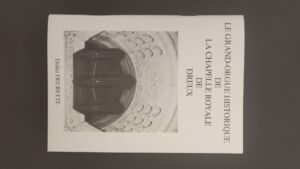 “The Historic Grand Organ of the Royal Chapel of Dreux,” by Didier Decrette
Pages:
Price: €9
This booklet offers an in-depth exploration of the historic grand organ in the Royal Chapel of Saint-Louis in Dreux, a masterpiece built by Aristide Cavaillé-Coll in 1845. Through the perspective of Didier Decrette, organist emeritus of the Royal Chapel, this work sheds light on the history, sonic richness, and technical features of this remarkable instrument.
This booklet is intended both for music enthusiasts and for visitors curious to uncover the secrets of this iconic instrument, located at the heart of the Orléans royal necropolis.